
Gardening Services East Ham — Recycling and Sustainability
At Gardening Services East Ham we place the eco-friendly waste disposal area and the sustainable rubbish gardening area at the centre of everything we do. Our East Ham gardening services focus on diverting green and household garden waste away from landfill, reducing transport emissions with low-carbon vans, and creating circular-use outcomes for soil, wood and plant materials across the borough.Our sustainability commitments
We operate with measurable targets and practical site-level solutions. The team follows the borough's approach to waste separation and supports local separation schemes: food, mixed recycling and green waste are handled distinctly. We publicly commit to a 65% recycling rate for all garden and landscaping waste collected by 2028, with regular audits to track progress toward a more resilient, low-impact East Ham garden sector. Aiming for a robust eco-friendly gardening waste area means investing in sorting bays, composting platforms and safe transfer to authorised facilities. Our sustainable rubbish gardening area design reduces contamination, improves material quality for composting and encourages reuse. By aligning with the borough’s waste separation policies, our crews separate wood, brash, soil and recyclable plastics at source to maximise material recovery and local reuse.
Local transfer stations and resource recovery
We work closely with local transfer stations and resource centres to ensure that recovered materials are processed responsibly. Typical local hubs include:- Beckton transfer and consolidation points for green and bulky waste
- Barking Thames-side handling facilities for timber and inert materials
- Newham-area resource yards that facilitate composting and recycling streams
These transfer stations allow our East Ham gardening services to minimise haul distances and reduce vehicle miles, keeping associated carbon emissions lower than long-distance disposal options.
Partnerships with certified processing centres mean that wood mulches are turned into landscaping products, soils are screened and remediated, and recyclable plastics and metals are routed back into manufacturing streams rather than being landfilled.
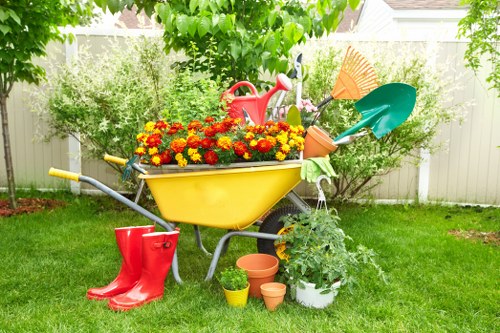 Our fleet improvements: We are transitioning to low-emission, low-carbon vans for our gardening services in East Ham. The fleet mix includes electric utility vans and hybrid vehicles for heavier loads. Route optimisation software reduces unnecessary mileage; charging points at depots and scheduled charging windows ensure operational readiness while minimising peak-grid impacts. These measures combine to reduce scope 1 emissions and contribute to local air quality improvements.
We also invest in mobile equipment that reduces waste volume on-site: wood chippers for onsite processing, mobile composting bays for rapid initial decomposition, and secure bins for segregated materials. These practices shrink the footprint of the sustainable rubbish gardening area and help maintain tidy, compliant workspaces.
In keeping with our ethos of reuse, larger items suitable for repair, repurposing or donation are diverted from general waste streams and prepared for redistribution through partner networks rather than being sent for disposal.
Our recycling activity reflects the local context. East London boroughs encourage clear separation of food waste, mixed recycling and residual refusal; we complement that approach with additional sorting for landscaping specifics: wood, green waste, soil, stones and metals. Typical recycling activities we manage include:
- Source-separated green waste composting and resale as soil improver
- Wood recycling for biomass, chipping and reuse as mulch
- Recovery of metals, plastics and glass from landscaping debris
By treating garden waste as a resource, we preserve materials for local re-use and support the borough's circular economy goals. Our teams receive regular training on the borough’s waste separation standards so that our collections complement municipal services rather than duplicate them.
 We partner with charities and community organisations to extend the life of useful items. Working with local charities and social enterprises, we donate reusable planters, soil, seeds and salvageable timber to community gardens, urban farms and training programmes. These partnerships are structured to ensure safe handling and clear documentation of transfers so that materials can support neighbourhood greening projects and social value objectives.
 Operational transparency and continuous improvement are central to our approach. We monitor diversion rates, vehicle fuel use and the condition of reused materials. Quarterly reports help us measure progress toward the 65% recycling target and identify opportunities to further reduce landfill contributions from garden clearances and landscaping removals.
Our sustainable rubbish gardening area is more than a storage yard: it is a managed resource depot where materials are sorted, processed and allocated for reuse, composting or authorised recycling. We follow best practice for hazardous material exclusion and adhere to local authority rules for accepted and excluded wastes.
Gardening Services East Ham remains committed to improving environmental outcomes through low-carbon transport, robust segregation, local processing at nearby transfer stations and active partnerships with charities and community groups. Our combined efforts help build a greener, cleaner East Ham — where garden waste becomes part of a regenerative local economy rather than an environmental burden.